

After our recent post about how leakage is a pressing issue with patient access, we now want to take a look at the specific workflow that can function as either the starting line or the finish line: referral management.
The receiving or sending of a referral may seem like a simple task, but it's really just the first domino in a line of complex and often aggravating tasks.
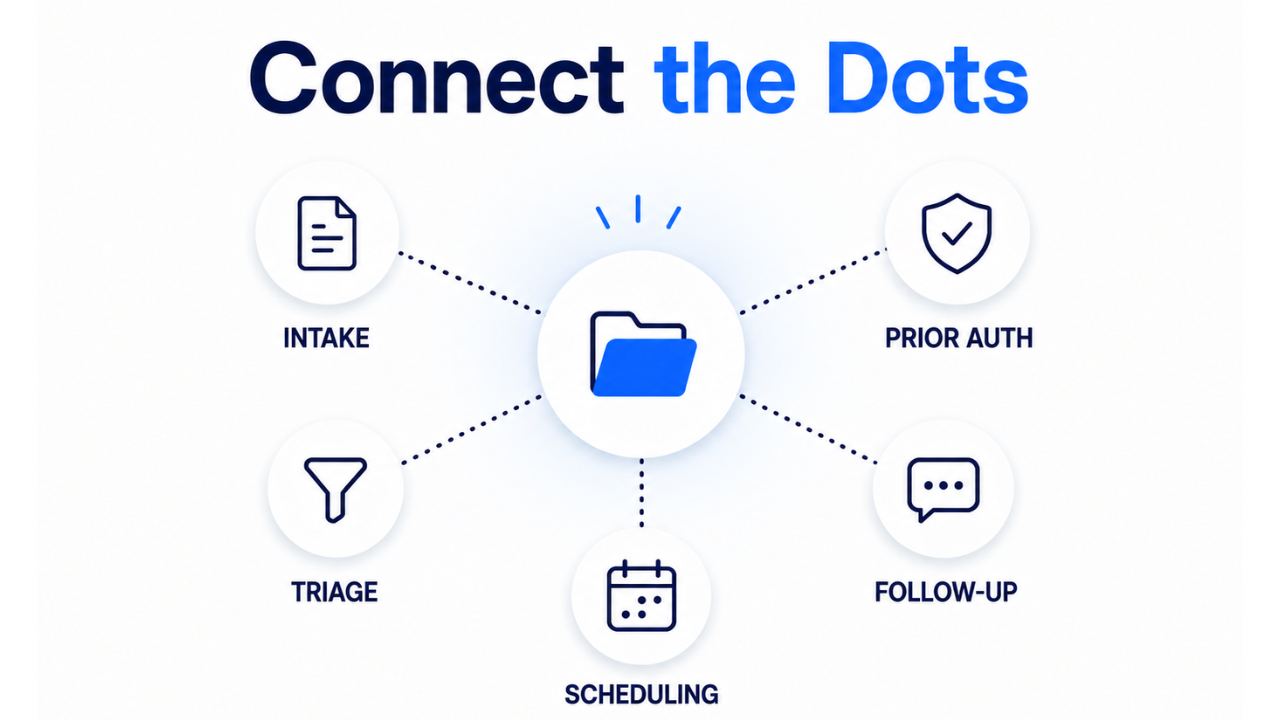
For incoming referrals, that may mean matching the referral to a patient, checking it for completeness, routing it to the right owner, reviewing urgency, connecting it to scheduling, coordinating prior authorization, and closing the loop with the referring provider.
For outgoing referrals, it may mean making sure the patient actually gets connected to the outside specialist, confirming whether the appointment happened, chasing consult notes, and following up with specialty providers so patients are not forgotten after they leave the four walls of the clinic.
This is why referral management software needs to manage the full path from intake to scheduled care.
What centralized referral management should include
A strong referral workflow starts with connecting the disparate channels by which referrals can arrive. If those channels are not centralized, teams spend too much time figuring out what came in, where it belongs, and who should act on it.
With Calvient, inbound work is consolidated into one operating queue. From there, AI-powered workflows can classify the request, extract key information, identify missing fields, and route the item to the right next step.
Additionally, that intake step matters because incomplete referrals are one of the biggest sources of downstream rework. A referral might be missing some crucial component, and if that gap is not caught early, it can show up later as a scheduling delay, prior auth delay, or patient frustration.
A centralized referral system helps by making every handoff visible. The referral is not “done” when it is received or sent. It is done when the patient has moved to the next appropriate step and the loop is closed.
Connecting referrals to scheduling and prior auth
Again, triage is not the end of referral management as an incoming referral is only valuable if it eventually evolves into completed care. Consequently, scheduling and acquiring prior authorization should be connected to the same workflow.
Scheduling teams and prior auth teams have various essential tasks that must be completed before care can be provided. When those teams work from separate, disconnected queues, patients wait. This fruitless passage of time benefits no one.
The burden on prior authorization teams is hard to overstate. The American Medical Association has reported that physicians widely associate prior authorization with care delays and treatment abandonment. MGMA has also reported that many medical group practices have hired or reassigned staff specifically to manage growing prior authorization volume.
Centralized referral management software does not eliminate payer requirements, but it will reduce the operational drag around them. It can help teams track auth status, surface aging cases, chase payer follow-up, identify missing documentation, and keep scheduling aligned with readiness.
Closing the loop on outgoing referrals
Incoming referrals are only one side of referral management. Many organizations, especially FQHCs and primary care groups, spend more time managing outgoing referrals to specialty providers.
Sending the referral does not mean washing your hands of that patient; the referring clinic still needs to know what happens next. Was the patient scheduled? Did the patient attend? Was a consult note returned? Is additional follow-up needed?
Without a centralized process, outgoing referrals can become invisible. Staff may rely on spreadsheets, phone calls, or manual reminders to follow up with specialty offices. For FQHCs, where teams often coordinate care across many outside partners, this creates a major risk: patients can be referred out, but never fully closed out.
Calvient helps teams turn outgoing referral follow-up into trackable work. Teams can monitor referral status, create follow-up tasks, manage outreach to specialty providers, track consult-note return, and escalate aging referrals before patients are forgotten. That gives FQHCs and other referring organizations a clearer way to close the loop, even when the next step happens outside their own clinic.
From referral received to referral resolved
The goal of referral management software is to keep patients moving; no more stalling out due to bureaucratic roadblocks.
When referral intake, triage, scheduling, prior auth, and outgoing referral follow-up are connected, teams can move from reactive queue management to proactive patient access operations. Work becomes visible. Ownership becomes clear. Follow-up becomes automatic. Leaders can see where the process is breaking before patients fall through the cracks.
A centralized referral workflow helps turn "referral received/sent" to "referral resolved." That is the difference between seeing patients and caring for patients.
Book a demo with us to see how we can help you close your referral loops with confidence.